Building Healthier Connections
Childhood is not just about growing taller or learning to read it’s also about learning how to connect with others. Friendships, teamwork, empathy, and communication are all crucial parts of a child’s emotional and social development. But some children struggle in these areas. They might feel isolated, get into conflicts, or face rejection from peers. Over time, these social and interpersonal problems can affect their confidence, academic performance, and even long-term mental health.
At Mindsight, led by Punit Dixit, a compassionate child psychologist, we help children and families understand the roots of social struggles and develop stronger, more meaningful connections both at home and in school.
“Children learn how to love, share, and lead not by instruction, but by experience.”
Understanding Social and Interpersonal Problems
Social problems don’t always look dramatic. Sometimes, it’s a child sitting alone during lunch; other times, it’s a child who can’t stop teasing others. These behaviours can stem from anxiety, low self-esteem, trauma, poor emotional awareness, or developmental differences like ADHD or autism spectrum conditions.
Interpersonal problems affect how children see themselves in relation to others. When unresolved, these challenges can make children feel lonely, rejected, or misunderstood shaping how they approach relationships even in adulthood.
1. Bullying – Victim or Bully
Bullying is one of the most visible forms of social distress among children. It can take many forms physical, verbal, social (exclusion), or cyberbullying. But both the victim and the bully need support.
| Role | Common Signs | Emotional Impact |
|---|---|---|
| Victim | Withdrawn behaviour, anxiety, avoiding school, low self-esteem | Fear, sadness, social withdrawal, academic decline |
| Bully | Aggression, controlling behaviour, lack of empathy, impulsivity | Anger issues, guilt, relationship problems, increased risk of antisocial behaviour |
Studies by UNICEF suggest that around 1 in 3 children globally have experienced bullying at some point during school years. Both victims and bullies often struggle with emotional regulation and social understanding.
At Mindsight, therapy focuses on breaking this cycle. Victims are supported to rebuild confidence and assertiveness, while bullies are guided toward empathy, impulse control, and emotional awareness. Parents and teachers are also trained to recognize warning signs early.
“A bully is not a monster but often a child who hasn’t yet learned a healthy way to be seen.”
2. Poor Social Skills
Some children find it difficult to read social cues they might interrupt often, speak bluntly, or avoid eye contact. Poor social skills can make it hard to make or maintain friendships, leading to frustration or loneliness.
Common causes include social anxiety, delayed emotional development, language barriers, or neurodevelopmental conditions like ADHD or autism. According to the American Psychological Association (APA), social skill difficulties affect up to 10–15% of school-aged children to some degree.
At Mindsight, social skills training helps children learn key interpersonal skills such as:
- Active listening and taking turns in conversation
- Recognizing body language and tone of voice
- Understanding personal space and empathy
- Building and maintaining friendships
Through role-play, games, and guided group sessions, children gradually build confidence in social situations learning not just what to say, but how to say it kindly.
“Social skills are not inherited they are taught, practiced, and reinforced with patience.”
3. Peer Pressure
As children grow, peers begin to influence their behaviour more than parents. Peer pressure can encourage both positive habits (like teamwork) and harmful ones (like lying, skipping school, or experimenting with risky behaviours).
Children who struggle with self-esteem or belonging are more likely to give in to negative peer pressure. Research published in the Journal of Youth and Adolescence found that strong parental connection and communication can reduce the negative effects of peer influence by almost 40%.
At Mindsight, therapy helps children strengthen their sense of self and learn assertiveness skills the ability to say “no” without guilt or fear. Parents are also guided on how to build open communication so that children feel safe sharing social challenges without shame.
“When children feel loved and accepted at home, they are less likely to seek validation elsewhere.”
4. Sibling Rivalry
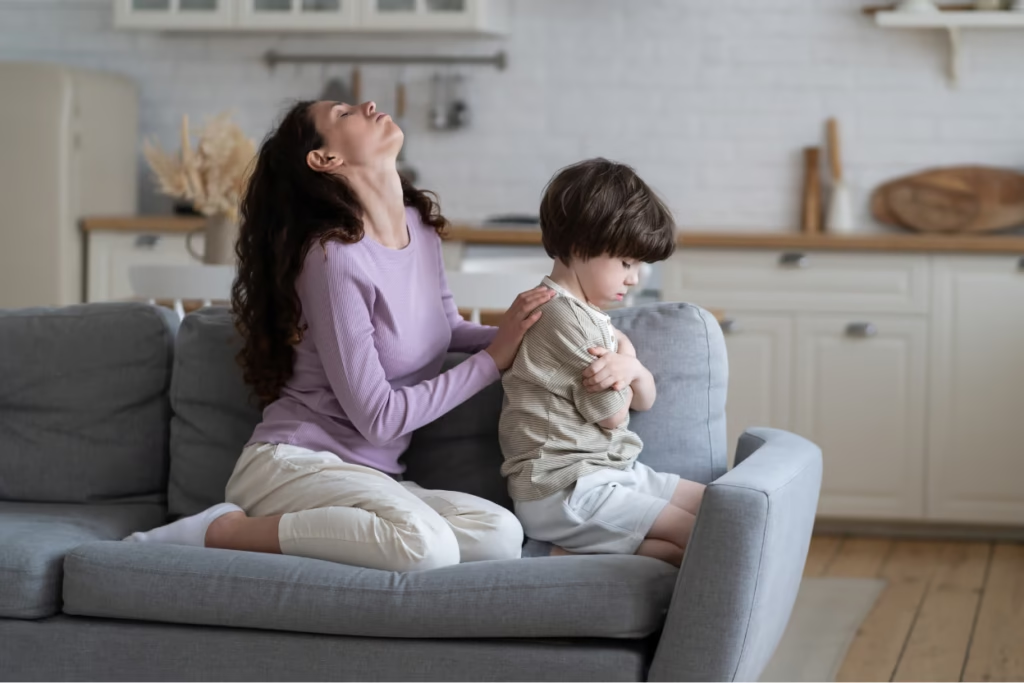
Every family has moments of conflict between siblings disagreements, jealousy, or competition are normal. But when rivalry becomes constant with frequent fights, resentment, or emotional distance it can affect the overall emotional climate at home.
Causes can include perceived favoritism, personality differences, or developmental gaps in maturity. Rivalry can increase when one sibling feels overlooked or when family stress (like parental conflict) is high.
At Mindsight, family therapy helps parents establish fairness, teach conflict resolution, and create moments of shared appreciation. Children learn emotional regulation and empathy recognizing that love is not a competition.
| Unhealthy Sibling Dynamics | Healthy Sibling Dynamics |
|---|---|
| Frequent blame and comparison | Mutual respect and individuality |
| Parent takes sides | Parent mediates neutrally |
| Jealousy or resentment | Cooperation and shared pride |
“Children need to know they are equally loved differently, but not less.”
5. Lack of Empathy
Empathy the ability to understand and share others’ feelings is the foundation of healthy social interaction. Some children, however, may struggle with empathy. They might appear insensitive, dismissive, or uninterested in others’ emotions.
This can stem from emotional neglect, modelling of aggressive behaviour, or difficulty reading emotional cues. Research shows that empathy begins to develop as early as age two, but needs continuous reinforcement through environment and guidance.
At Mindsight, empathy-building exercises are integrated into therapy. Through storytelling, perspective-taking games, and guided reflection, children learn to understand feelings both their own and others’. Parents are also shown how to model empathy at home by listening, labelling emotions, and validating feelings.
“Empathy is not a skill to be taught it’s a feeling to be modelled.”
6. Isolation and Social Withdrawal
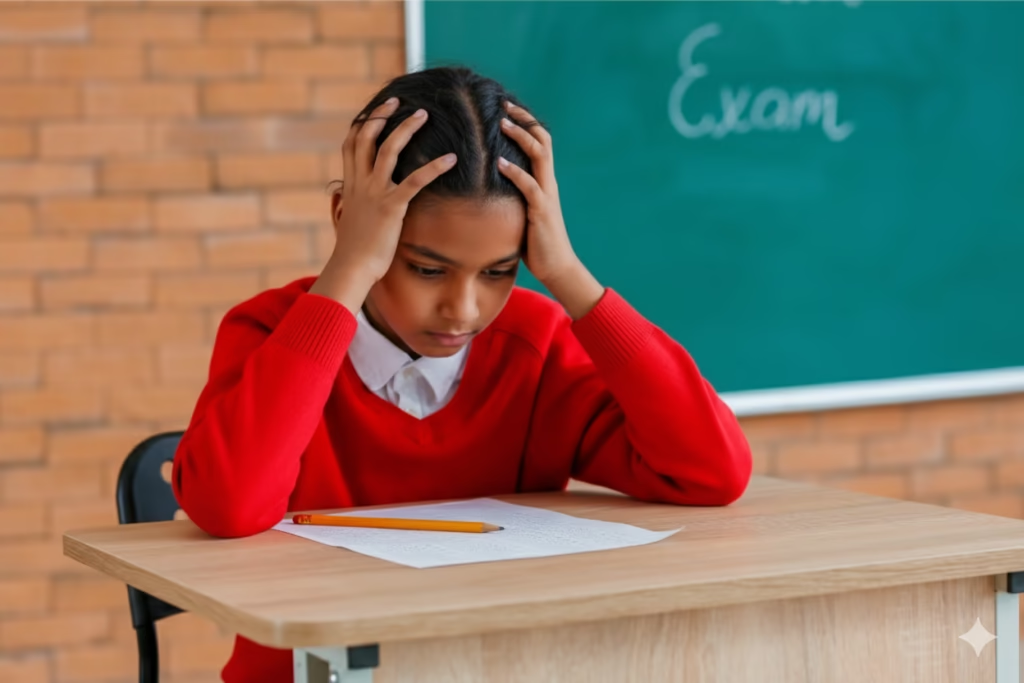
Some children avoid social situations altogether they prefer to be alone, avoid eye contact, or feel anxious in groups. While occasional solitude is healthy, consistent social withdrawal may indicate deeper issues like anxiety, depression, or low self-worth.
According to the National Institute of Mental Health (NIMH), nearly 7% of children experience social anxiety severe enough to interfere with daily life. Left unaddressed, isolation can increase the risk of mood disorders later in adolescence.
At Mindsight, therapy helps children gently re-engage with peers through controlled exposure and confidence-building exercises. Group therapy sessions provide safe, non-judgmental environments for social practice, while parents learn how to encourage participation without forcing it.
“Isolation is not disinterest it’s protection from discomfort. Safety must come before socializing.”
How Parents Can Support Social Development
- Model social behaviour: Children imitate how parents speak, listen, and handle disagreements.
- Encourage play: Group play teaches sharing, negotiation, and teamwork.
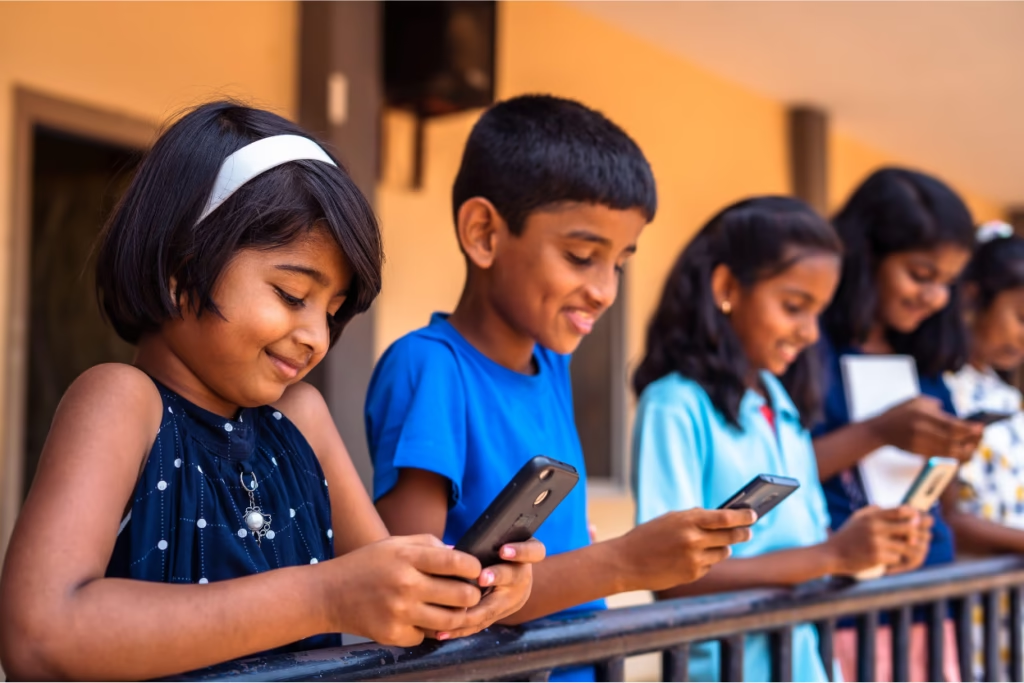
- Limit screen time: Excessive digital use reduces real-world interaction.
- Validate emotions: Help your child name and understand what they feel.
- Celebrate small wins: Acknowledge every positive interaction to build confidence.
How Therapy at Mindsight Helps
At Mindsight, Punit Dixit and his team specialize in improving children’s social and emotional functioning using evidence-based methods:
- Social Skills Training: Builds communication, empathy, and confidence.
- Play and Group Therapy: Provides real-time social interaction in a safe setting.
- Family Therapy: Strengthens the emotional foundation at home.
- Cognitive-Behavioral Therapy (CBT): Helps children manage anxiety and negative thinking patterns.
Through consistent support, children learn how to form connections, navigate conflicts, and feel comfortable in their social world.
“Every child can learn to belong they just need the right space and support.”
Final Thoughts
Social and interpersonal problems are not signs of failure they’re signals that a child needs guidance to understand the complex world of emotions and relationships. Early intervention can transform isolation into confidence and conflict into cooperation.
At Mindsight, under the care of Punit Dixit, we help children discover that social connection is not something to fear it’s something to enjoy. Through understanding, therapy, and love, every child can learn how to connect, communicate, and care.
“Children thrive when they feel seen, heard, and understood that’s where true social growth begins.”
At Mindsight, we help children build stronger bonds with themselves, with others, and with life.