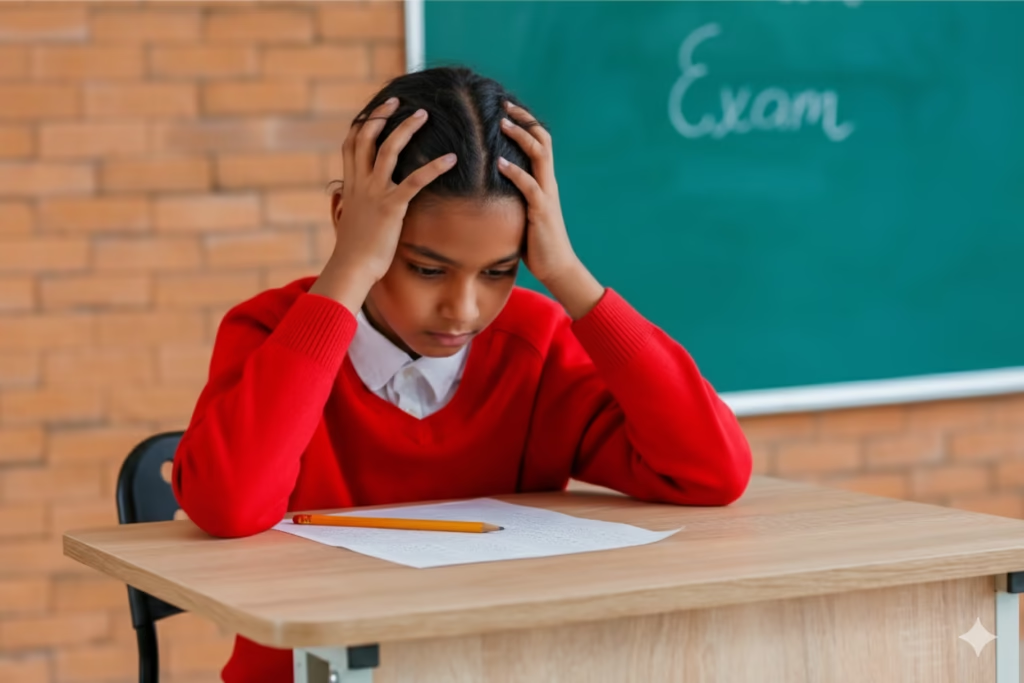
Healing Begins at Home
Home is the first classroom of emotional learning. It’s where children understand love, trust, security, and communication. But when the home environment becomes tense, unpredictable, or emotionally distant, it deeply affects a child’s sense of safety. Family and environmental problems don’t just influence behaviour they shape how a child feels, thinks, and connects with others. At Mindsight, under the compassionate care of Punit Dixit, we believe that helping a child heal means supporting the entire family system, not just the symptoms.
“Children may forget what you said, but they never forget how home made them feel.”
Let’s explore the key family and environmental factors that can impact a child’s mental and emotional well-being, and how therapy can help rebuild safety, communication, and stability at home.
Parental Conflict or Divorce
Conflict between parents, even if not directed at the child, creates an atmosphere of anxiety and insecurity. When arguments become frequent or hostile, children often internalize the tension blaming themselves or developing fears about losing one or both parents. Divorce, too, can leave lasting emotional effects, particularly if it involves sudden changes or ongoing disputes.
Research by the American Academy of Pediatrics shows that children from high-conflict homes are more likely to experience anxiety, sleep disturbances, and academic struggles. However, it’s not divorce itself that causes harm it’s the level of conflict and lack of communication surrounding it.
At Mindsight, therapy focuses on helping children process their feelings of confusion, guilt, or sadness. Family therapy and co-parenting guidance are provided to help parents maintain harmony and structure even after separation. Consistent reassurance, routines, and honest conversations can help children adapt more resiliently.
“Children can handle the truth better than they can handle silence.”
Parental Neglect or Overprotection
Two opposite extremes neglect and overprotection can both disrupt a child’s emotional growth. Neglect occurs when a child’s basic emotional or physical needs go unmet, leading to feelings of abandonment or worthlessness. Overprotection, on the other hand, stifles independence and self-confidence, making the child overly anxious or dependent.
According to UNICEF, emotional neglect is one of the most under-recognized forms of child maltreatment, often leaving invisible wounds that show up as low self-esteem, emotional numbness, or difficulty trusting others.
At Mindsight, therapy helps neglected children rebuild self-worth and safety through consistent care and validation. For overprotected children, therapy focuses on autonomy training helping them take small, manageable risks to build confidence and decision-making skills. Parents are coached to find a balanced approach: being available without being overbearing.
| Neglectful Parenting | Overprotective Parenting |
|---|---|
| Lack of attention or warmth | Excessive control or involvement |
| Child feels invisible or unwanted | Child feels incapable or dependent |
| Low emotional security | Low confidence in independence |
“Love helps a child grow control or neglect makes them shrink.”
Lack of Communication at Home
Communication is the foundation of trust in any family. When parents don’t listen, dismiss emotions, or avoid difficult conversations, children may feel emotionally disconnected. Over time, this lack of communication can turn into emotional isolation or resentment.
Many children in therapy express statements like “My parents don’t understand me” or “I can’t tell them how I feel.” This communication gap often leads to misunderstandings, behavioural issues, or secretive habits.
At Mindsight, family sessions focus on restoring open and healthy dialogue. Parents learn active listening not interrupting, not judging, and not rushing to fix but simply being present. Children, in turn, learn to express their feelings safely. When a child feels heard, healing begins instantly.
“When parents start listening, children stop shouting.”
Domestic Violence Exposure
Even if a child is not physically harmed, witnessing domestic violence can cause deep trauma. The home, which should feel safe, becomes unpredictable and frightening. These children often show signs of hypervigilance, nightmares, aggression, or withdrawal. They may struggle to trust adults or form healthy relationships later in life.
Studies from the World Health Organization (WHO) estimate that nearly 275 million children globally are exposed to domestic violence each year. The impact on the developing brain can mirror symptoms of post-traumatic stress disorder (PTSD).
At Mindsight, trauma-informed therapy helps children regain a sense of safety and stability. Through play therapy, art, and cognitive processing, they learn that what happened was not their fault. Parents (or non-offending caregivers) are also supported to rebuild safe, nurturing environments free from fear.
“Children who grow up in chaos don’t need perfection they need peace.”
Economic Stress or Migration
Financial hardship and frequent relocation can disrupt a child’s emotional and social stability. When parents are preoccupied with survival or work migration, children may feel neglected or insecure. Constant moves can make it difficult to maintain friendships or consistency in education, increasing stress and anxiety.
Research from UNICEF highlights that economic instability is strongly associated with higher rates of school dropout, behavioural issues, and depression among children. Children often internalize financial worries, believing they are somehow responsible for their parents’ stress.
At Mindsight, therapy helps children separate their self-worth from external circumstances. We also help parents develop emotional routines like consistent family check-ins to maintain connection despite practical challenges. Even small gestures of reassurance can anchor a child’s sense of safety amid change.
“Children don’t need wealth to feel secure they need presence and predictability.”
Single-Parent or Broken Families
Single parenting is becoming increasingly common, and while many single parents provide remarkable love and care, the emotional and logistical strain can still affect children. Feelings of abandonment, divided loyalties, or confusion about family roles are common, especially when separation or loss hasn’t been properly explained.
According to data from the Indian Journal of Psychiatry, children from single-parent homes are twice as likely to develop symptoms of anxiety or depression, though these effects are significantly reduced when the remaining parent provides warmth, consistency, and emotional openness.
At Mindsight, therapy focuses on helping children accept new family dynamics with reassurance and emotional validation. We support parents in balancing structure with warmth and creating opportunities for quality bonding time, even in busy or stressful circumstances.
| Common Challenges in Single-Parent Homes | Therapeutic Focus at Mindsight |
|---|---|
| Emotional loneliness or fear of loss | Building security through consistent routines |
| Role confusion or loyalty conflicts | Helping children understand and accept family changes |
| Increased parent stress or burnout | Parent counselling and stress management support |
“A single parent with love can heal more than two distracted parents with conflict.”
How Therapy at Mindsight Helps Families Heal
At Mindsight, Punit Dixit and his team understand that children don’t exist in isolation they reflect their environments. Therapy focuses not just on the child, but on strengthening the emotional fabric of the family. Our approach includes:
- Family Therapy: Encourages healthy communication, empathy, and conflict resolution within the household.
- Parent Coaching: Helps caregivers respond with balance neither too distant nor too controlling.
- Trauma-Informed Care: Supports children exposed to violence, loss, or instability.
- Play and Art Therapy: Allows children to express feelings non-verbally in a safe, creative way.
The goal isn’t to create perfect families it’s to create emotionally safe ones. When the family heals together, children thrive naturally.
“Strong families aren’t those without problems they’re the ones who talk, listen, and grow through them.”
Final Thoughts
Family and environmental challenges can shake a child’s world but with the right understanding and support, healing is always possible. Every home, no matter how broken, can be rebuilt with empathy, communication, and love.
At Mindsight, under the guidance of Punit Dixit, we help families move from conflict to connection. By addressing emotional wounds and rebuilding healthy patterns, children regain their sense of safety
“The environment that breaks a child can also be the one that heals them when filled with love, listening, and understanding.”
At Mindsight, we help families heal together one conversation, one connection, and one child at a time.